
E-Bikes: Carbon Footprint & Sustainable Transport
E-bikes, combining human pedaling with battery assistance, significantly reduce greenhouse gas emissions by replacing car trips and offering high energy efficiency. This article explores how electric bikes lower CO₂e, details lifecycle emissions, and provides practical steps for riders to maximize climate benefits. E-bikes offer a pragmatic pathway for sustainable transport, substituting short and medium car trips with substantially less energy and material use than private cars, underscoring a global shift towards greener commuting solutions.
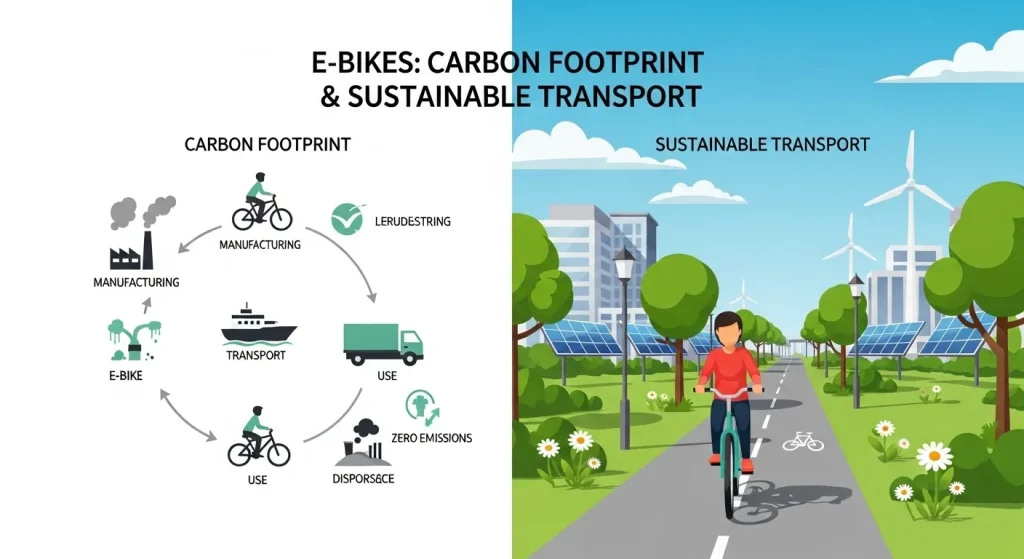
Carbon Emission Savings
E-bikes reduce direct carbon emissions by producing no tailpipe CO₂ and requiring significantly less energy per kilometer than cars, leading to lower use-phase emissions. This, combined with a smaller manufacturing footprint, results in a much lower lifecycle CO₂e per kilometer, typically an order of magnitude less than conventional cars. Can E-Bikes Really Replace Your Car? is very good guiding.
E-Bikes vs. Cars
E-bikes consume roughly 5–20 Wh/km, a fraction of the energy required by electric cars, and have much lower manufacturing emissions. Replacing a 10 km round-trip car commute five days a week with an e-bike can save several hundred kilograms of CO₂e per year, making them a practical, cost-effective, and environmentally superior alternative for urban trips up to 15-20 km.
Clean Air & Zero Emissions
E-bikes produce zero tailpipe emissions, releasing no PM, NOx, or VOCs, which directly improves local air quality in urban environments. This reduces health-damaging particles, lowering respiratory and cardiovascular risks for city residents and contributing to more livable, breathable cities.
CO₂ Savings Per KM
An e-bike typically saves 100–200 grams CO₂e per kilometer when replacing a conventional petrol car. For instance, replacing a 10 km round trip saves about 1.9 kg CO₂e, totaling roughly 48 kg CO₂e per month for a 5-day-a-week commute. Over a year, this can amount to over 570 kg CO₂e saved by a single rider.
Wider Environmental Perks
Beyond CO₂ reductions, e-bikes offer co-benefits like lower noise, reduced particulate emissions, and decreased infrastructure wear due to their lighter mass. These improve urban livability, create quieter streets, and reduce road repair frequency. E-bikes also require less parking space, indirectly reducing urban redevelopment pressures and freeing up valuable urban land for green spaces or housing.
- Reduced noise and pollution: Quieter motors and no combustion emissions improve street-level conditions.
- Lower infrastructure burden: Less pavement damage limits maintenance cycles and associated embodied emissions.
- Space efficiency: Smaller parking footprints free urban land for green or active uses.
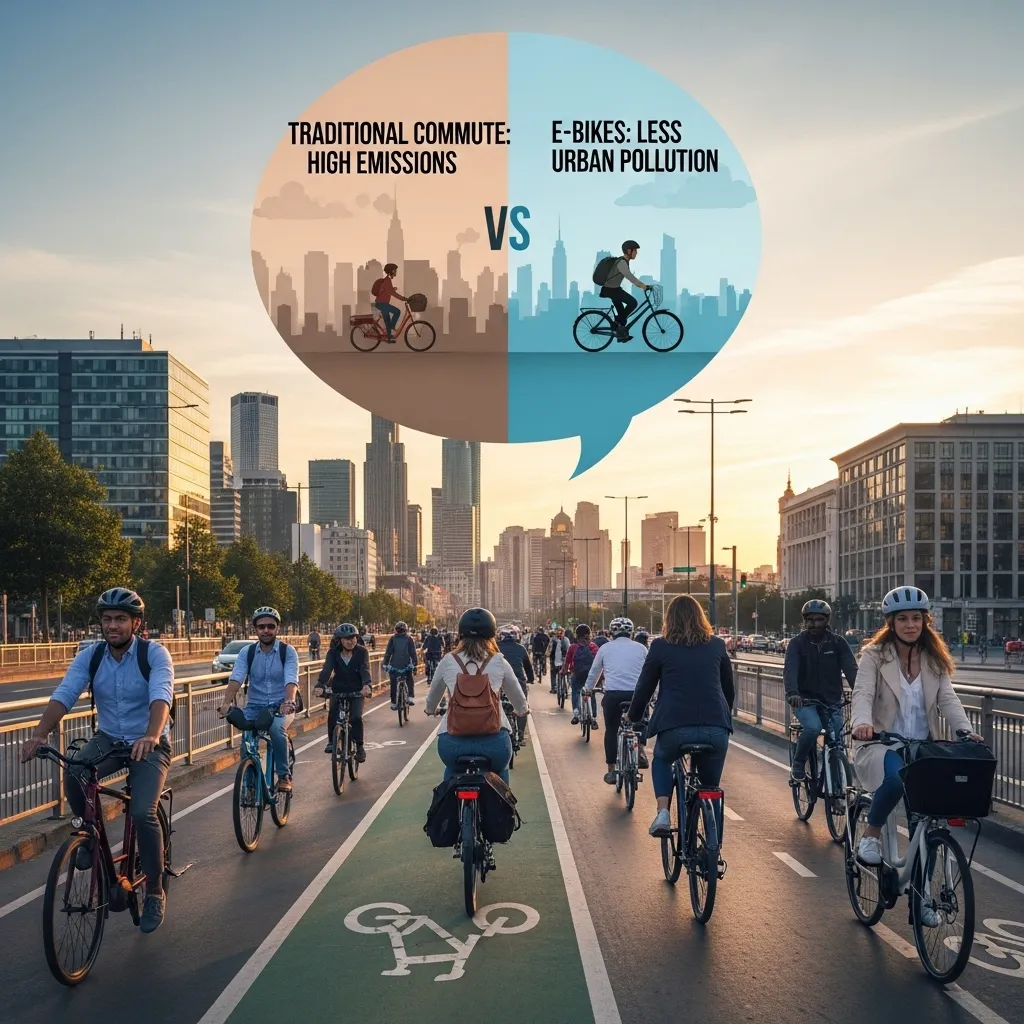
Less Urban Pollution
E-bikes significantly reduce local noise and eliminate tailpipe combustion, lowering concentrations of PM2.5, NOx, and VOCs. This quieter operation and cleaner air improve urban quality of life, reduce respiratory health issues, and help cities become healthier places to live.
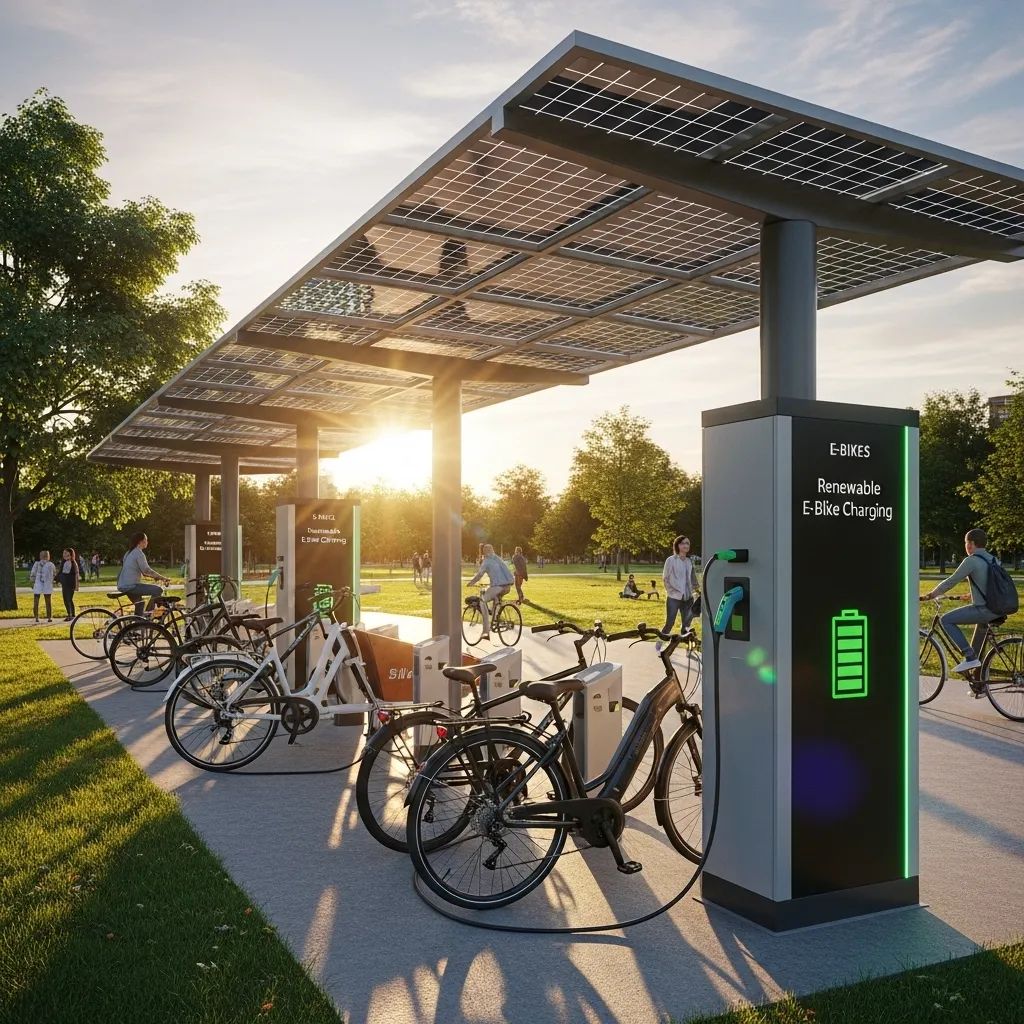
Renewable E-Bike Charging
Charging e-bikes with renewable electricity further shrinks lifecycle emissions by lowering use-phase CO₂ intensity. Using rooftop solar or green tariffs can significantly reduce CO₂e compared to a fossil-heavy grid. Riders can maximize climate benefits by choosing low-carbon utility options or charging during low-grid-carbon periods.
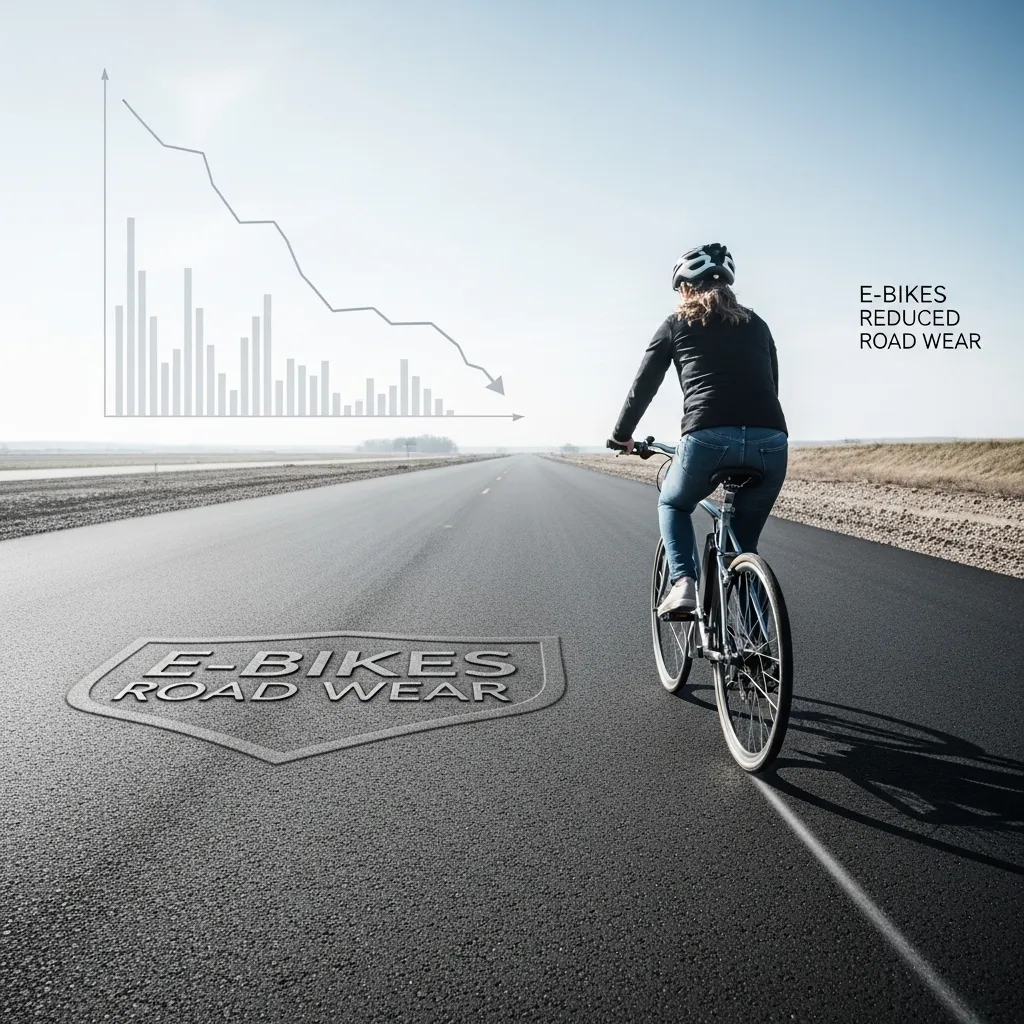
Reduced Road Wear
E-bikes, being much lighter than cars, impose less stress on roads and bridges, reducing maintenance frequency and intensity. This leads to fewer construction cycles, less heavy equipment use, and lower embodied carbon from repair materials, helping cities avoid recurring infrastructure emissions.
E-Bike Lifecycle
A full lifecycle perspective considers emissions from raw materials, manufacturing (frames, motors, batteries), transport, use-phase charging, maintenance, and end-of-life. Batteries and motors often dominate manufacturing emissions, but overall e-bike material use is low compared to cars. Minimizing lifetime emissions involves choosing durable components, extending battery life, and prioritizing repair and refurbishment.
Manufacturing Footprint
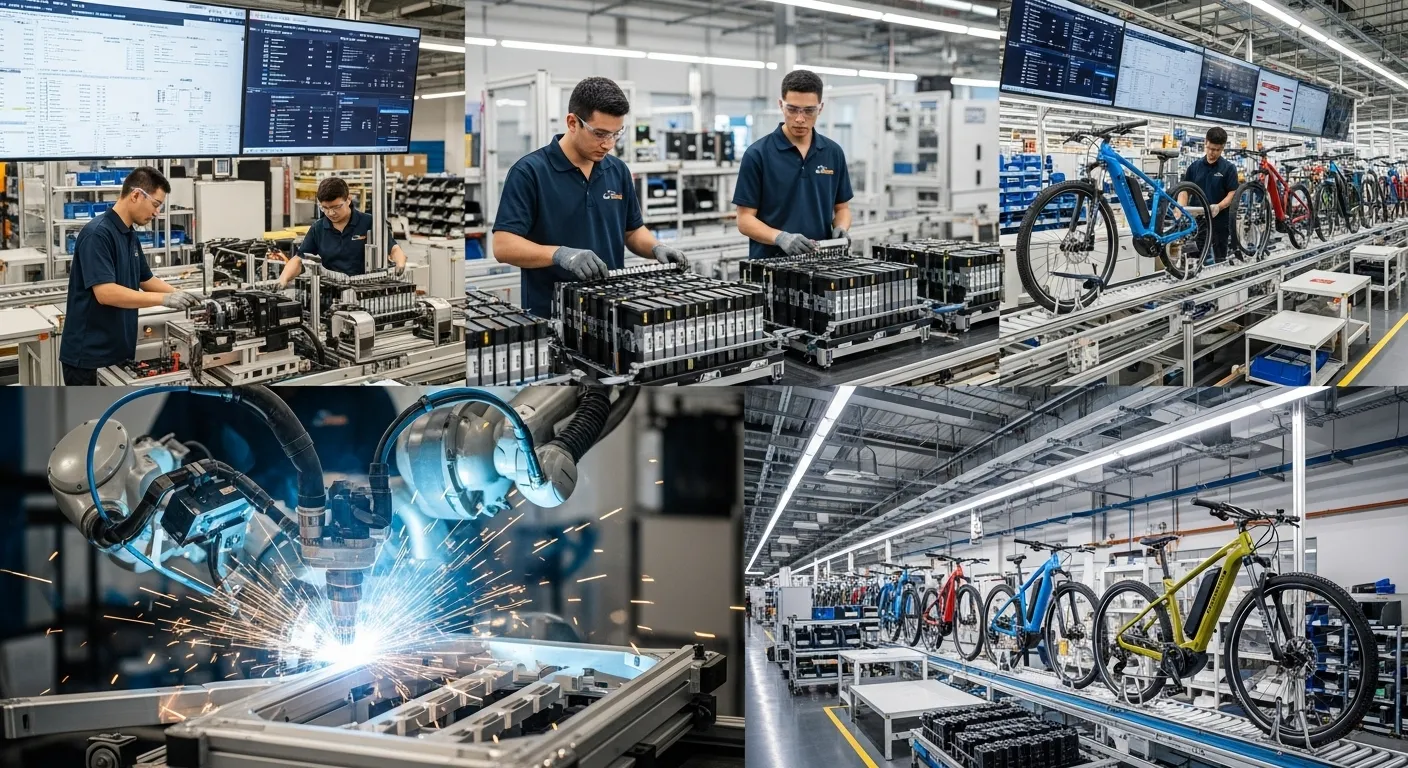
Manufacturing emissions, primarily from battery cells and motor magnets, are influenced by material extraction, processing, and transport. Factors like supplier energy mix and material choice affect total CO₂e. Reducing this footprint involves choosing low-carbon suppliers, durable materials, and supporting refurbishment over replacement.
Battery Production & Recycling
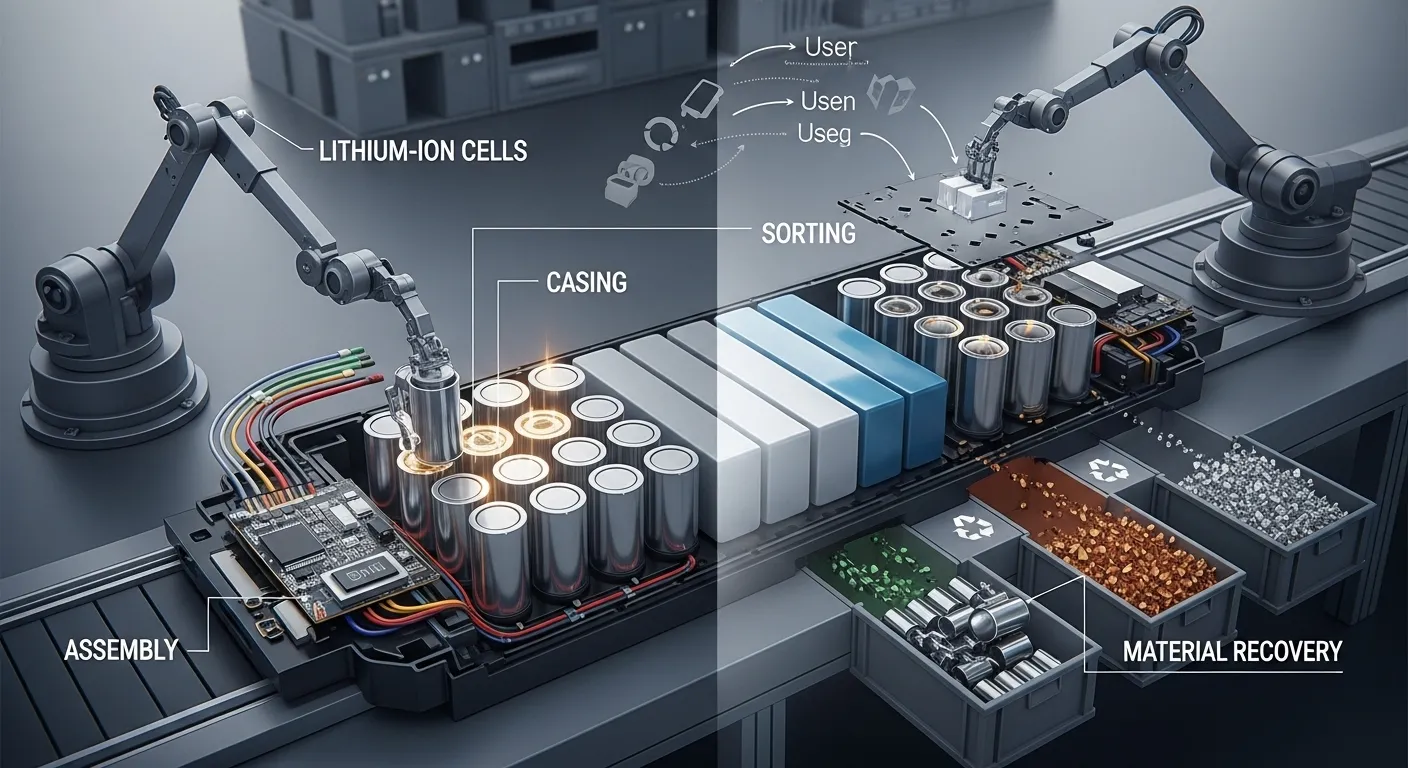
Battery production carries environmental and social impacts from mining (lithium, cobalt, nickel) and energy-intensive cell manufacturing, increasing their lifecycle emission share. Recycling and second-life pathways are crucial for reducing impacts and conserving resources. Effective recycling systems and manufacturer take-back programs, alongside trends toward lower-cobalt chemistries, are essential for sustainability.
Sustainable Maintenance
Regular maintenance extends component life, reducing premature replacement and lowering per-kilometer amortized emissions. Proactive care, including proper tire pressure, drivetrain lubrication, brake alignment, and battery health monitoring, maximizes useful life and minimizes embodied emissions.
- Daily tire check: Inspect tire pressure and condition before rides.
- Weekly drivetrain care: Clean and lubricate chain and gears.
- Monthly brake and bolt inspection: Adjust brakes and torque bolts.
- Battery monitoring: Follow recommended charging patterns and storage levels.
These practices reduce the need for major replacements, lowering the embodied-carbon cost per kilometer.
Urban Mobility & Carbon
E-bikes accelerate modal shift by making medium-distance trips feasible, enabling cargo transport, and complementing public transit. Adoption and policy interventions (rebates, dedicated lanes) directly influence car trip migration. City case studies show that even modest e-bike adoption, supported by infrastructure, yields measurable urban transport emission reductions.
Replacing Car Trips
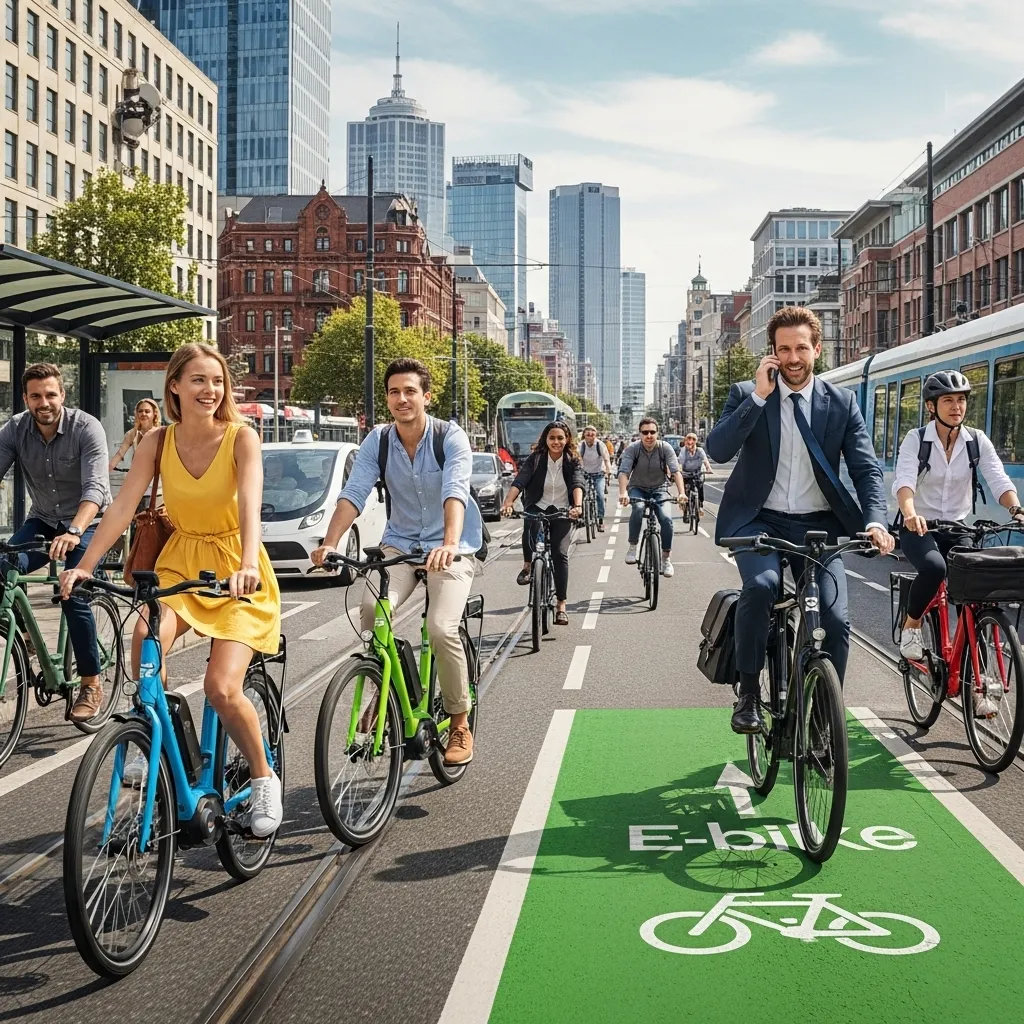
E-bikes can replace many urban car trips (under 10–15 km), especially with cargo or commuter models. While behavioral and weather barriers exist, solutions like cargo e-bikes and secure parking mitigate them. Studies indicate significant potential for e-bike substitution in congested areas, displacing high-emission vehicle miles.
Adoption & Emissions
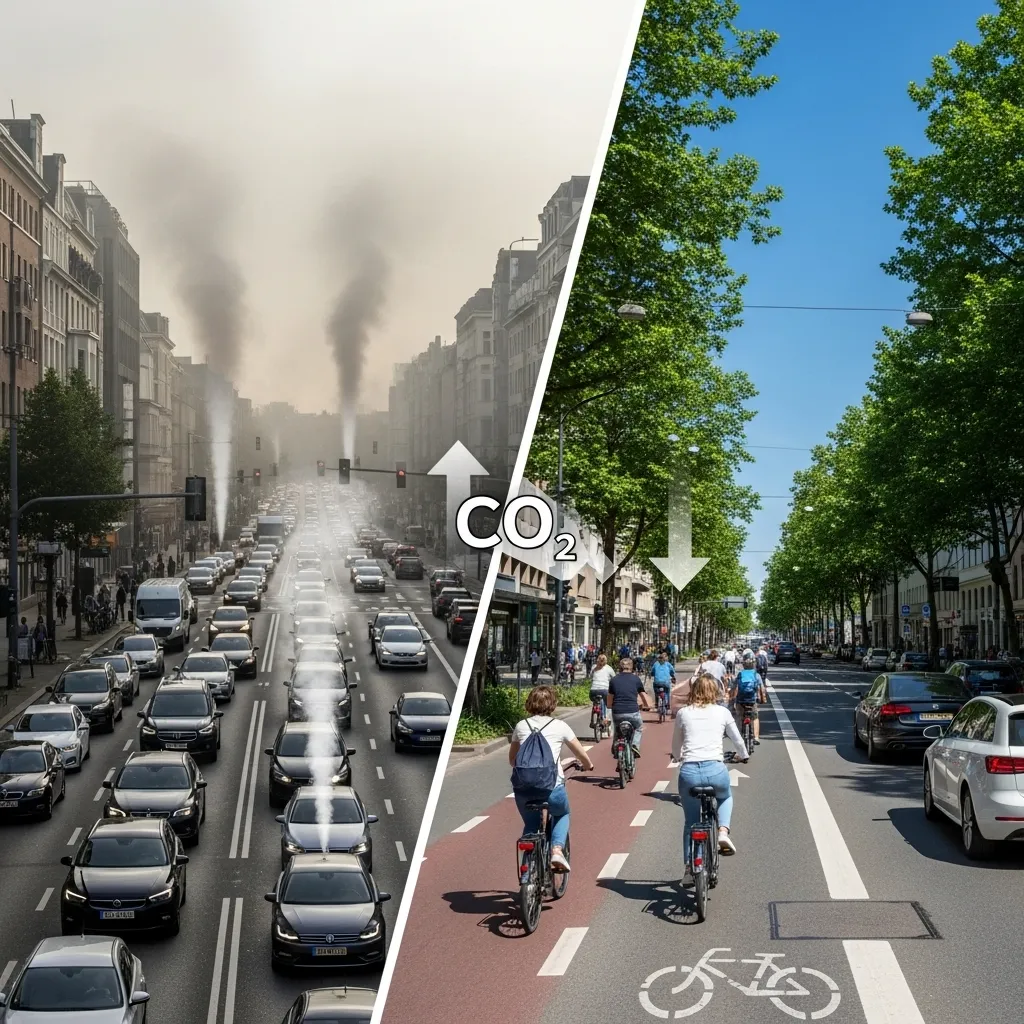
E-bike adoption is growing robustly, driven by demand for affordable electric mobility and supportive municipal policies. City studies consistently report measurable modal shifts and per-user annual CO₂e reductions when e-bike programs reach critical adoption thresholds. These statistics quantify city-level benefits and support investments in infrastructure and incentives.

Government Incentives
Governments boost e-bike adoption through incentives like purchase rebates, tax credits, and infrastructure investments (bike lanes, secure parking). These lower costs, reduce risk, and improve safety, making e-bikes more accessible to a broader population. Local programs can be found via municipal transport authorities, aligning individual incentives with carbon-reduction goals.
Battery Sustainability
E-bike batteries are central to environmental performance, with their production, materials, and lifespan significantly impacting manufacturing CO₂e per kilometer. Battery chemistry, recycling, and charging behaviors all shape total impact. Trends toward lower-impact chemistries and improved recycling reduce risks. Riders can reduce emissions by choosing lower-impact chemistries, following charging best practices, and utilizing proper recycling.
Li-Ion Battery Impacts
Lithium-ion batteries have environmental and social impacts from mining metals (lithium, cobalt, nickel) and energy-intensive cell manufacturing, contributing substantially to embodied carbon. Batteries often represent a leading manufacturing-stage share of an e-bike’s lifecycle impact. Industry shifts toward reduced cobalt, improved energy efficiency, and increased reuse/recycling are lowering impacts, but effective end-of-life systems are crucial.
Battery Life & Carbon
Battery life directly impacts amortized manufacturing emissions; longer life means lower CO₂e per kilometer. Extending cycle life through moderate discharge, avoiding extreme temperatures, and proper storage increases total lifetime kilometers and reduces per-kilometer emissions. Doubling battery life roughly halves its per-kilometer manufacturing impact.
Hydro Dipping & Sustainability
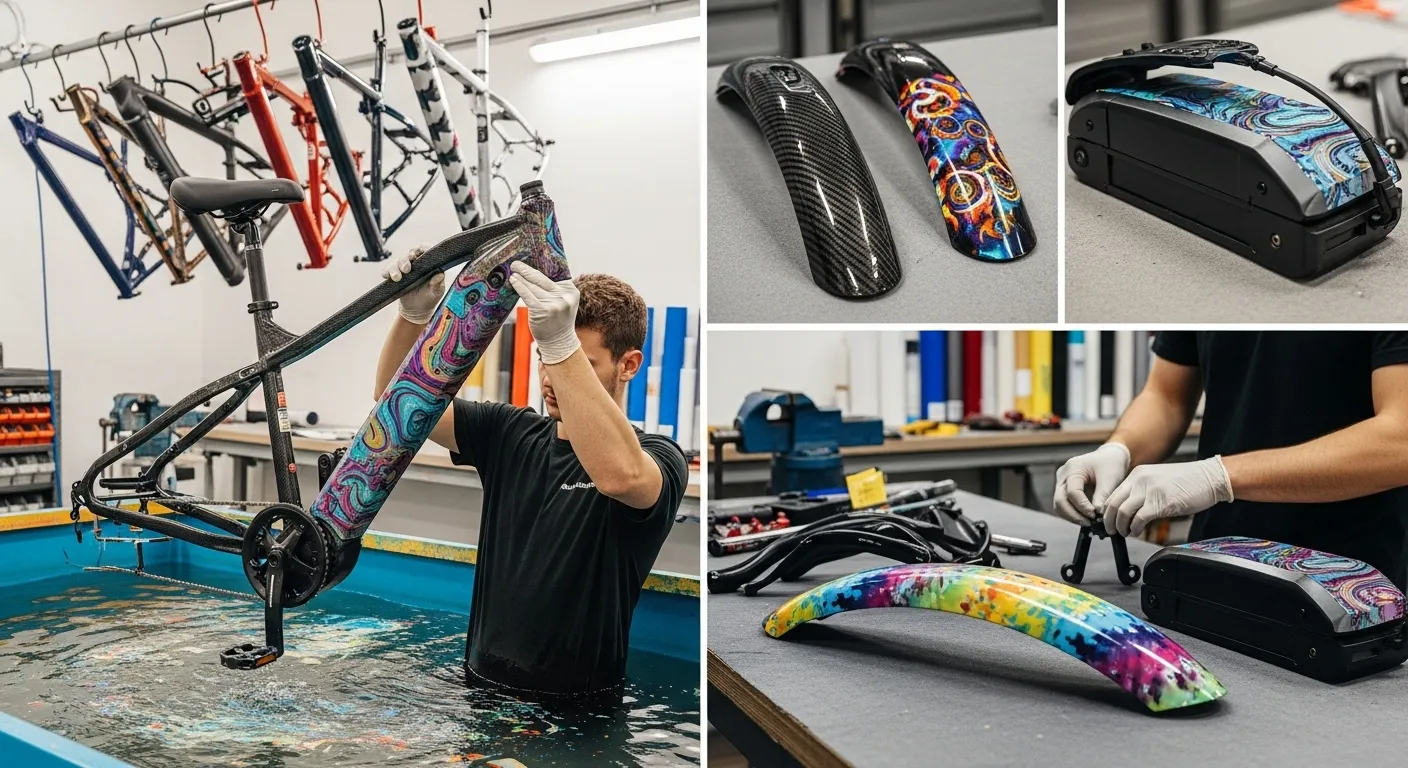
Hydro dipping is a surface-finishing process that applies durable patterned coatings to e-bike components, offering aesthetic customization and extending usable life. As a refurbishment strategy, it protects surfaces, reduces the need for replacement, and enables cost-effective upgrades, aligning with circular-economy principles by favoring repair over disposal, especially for second-hand e-bikes.
Hydro Dipping Customization
Suitable for smooth, rigid parts like frames and fenders, hydro dipping applies light, durable coatings that enhance corrosion resistance and aesthetics without significant weight. This process conserves embodied materials by avoiding heavy application or full part replacement. Proper care prolongs the finish, supporting longer component service life.

Hydro Dipping Benefits
Hydro dipping refurbishment reduces embodied emissions by avoiding new-part manufacturing. Preserving a frame or accessory through cosmetic restoration displaces the CO₂e of producing a replacement. It is more resource-efficient than full repainting, requiring less material and energy for application, thus extending component working life.
E-Bike Carbon FAQ
This FAQ section provides concise answers to common questions about e-bikes and emissions, offering quick facts and mitigation steps for riders and policymakers alike.
E-Bikes vs. Other Transport
Yes, e-bikes significantly reduce carbon footprint compared to petrol cars due to zero tailpipe emissions, low energy use, and smaller manufacturing footprints. Benefits include large per-kilometer lifecycle differentials and local air-quality improvements. Maximizing benefits requires low-carbon charging and prioritizing refurbishment.
Coal Charging & E-Bikes
Charging from a coal-heavy grid reduces, but typically doesn’t negate, e-bike benefits because their electricity demand is small relative to cars. Mitigation includes charging during lower-carbon periods, using green tariffs/solar, or replacing high-emission car trips. E-bikes often remain lower-emission alternatives even in carbon-intensive grids.
City Emission Reduction
Replacing car trips with e-bikes at scale yields measurable city-level emission reductions, as many urban trips are suitable for substitution, offering substantial per-trip CO₂e savings. City studies show aggregated reductions that scale with adoption, multiplying individual savings into meaningful municipal totals.
Conclusion
E-bikes stand out as a highly effective and pragmatic solution for reducing carbon emissions and fostering sustainable urban transport. From their minimal use-phase emissions and smaller manufacturing footprint compared to cars, to their wider environmental benefits like improved air quality and reduced infrastructure burden, e-bikes offer a comprehensive pathway to greener living. you can read our comparison guide about What Urban Commuters Should Know About E-Bikes also.
By embracing practices such as renewable charging, diligent maintenance, and responsible battery recycling, riders can further amplify these positive impacts. As cities invest in supportive infrastructure and incentives, e-bikes will play an indispensable role in accelerating modal shift and achieving global climate targets.