How Do E-Bikes Work? A Beginner’s Guide to Electric Bikes
E-bikes dominate the bicycle market as the fastest-growing category today. A simple question comes up often – how do e-bikes work? An e-bike takes a regular bicycle and adds a battery and motor that help you pedal. This makes your ride easier and more fun. E-bikes have reshaped the scene of modern urban transportation by blending traditional cycling with power assist. Regular bikes need just human power, but e-bikes use motors to help riders hit speeds up to 20-28 mph in the US and 15.5 mph in the UK.
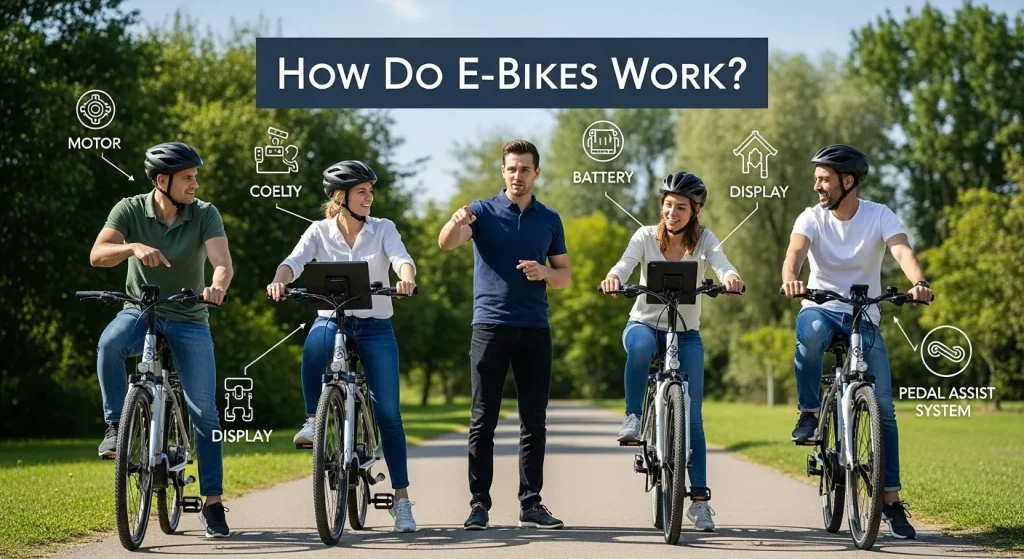
These limits depend on local rules. On top of that, states that define electric bicycles group them into three different classes. New riders who ask about e-bikes’ working will find it pretty simple. The motor gets its power from the battery and helps boost your pedaling. You can charge the battery by plugging it into any wall outlet. The process takes five to six hours on average. Battery sizes make a big difference in range – smaller ones last up to 20 miles per charge, while bigger batteries can take you an impressive 80 miles before needing a recharge.
What Makes an E-Bike Different
Traditional bicycles work on human power alone, but electric bikes blend rider effort with electric motor assistance. This game-changing combination sets e-bikes apart from regular bikes.
Motor vs. human power
how do e-bikes work through a dual-power system that combines human pedaling with motor assistance. These bikes function differently from motorcycles – they remain true bicycles but give riders an enhanced experience. The motor multiplies your pedaling effort and creates what many riders call a “constant tailwind” effect. The rules require all e-bikes to have working pedals to qualify as bicycles instead of motorized vehicles. Motors typically generate 250-750 watts of power, and 750 watts (1 horsepower) stands as the legal limit in many areas.
Pedal assist vs. throttle
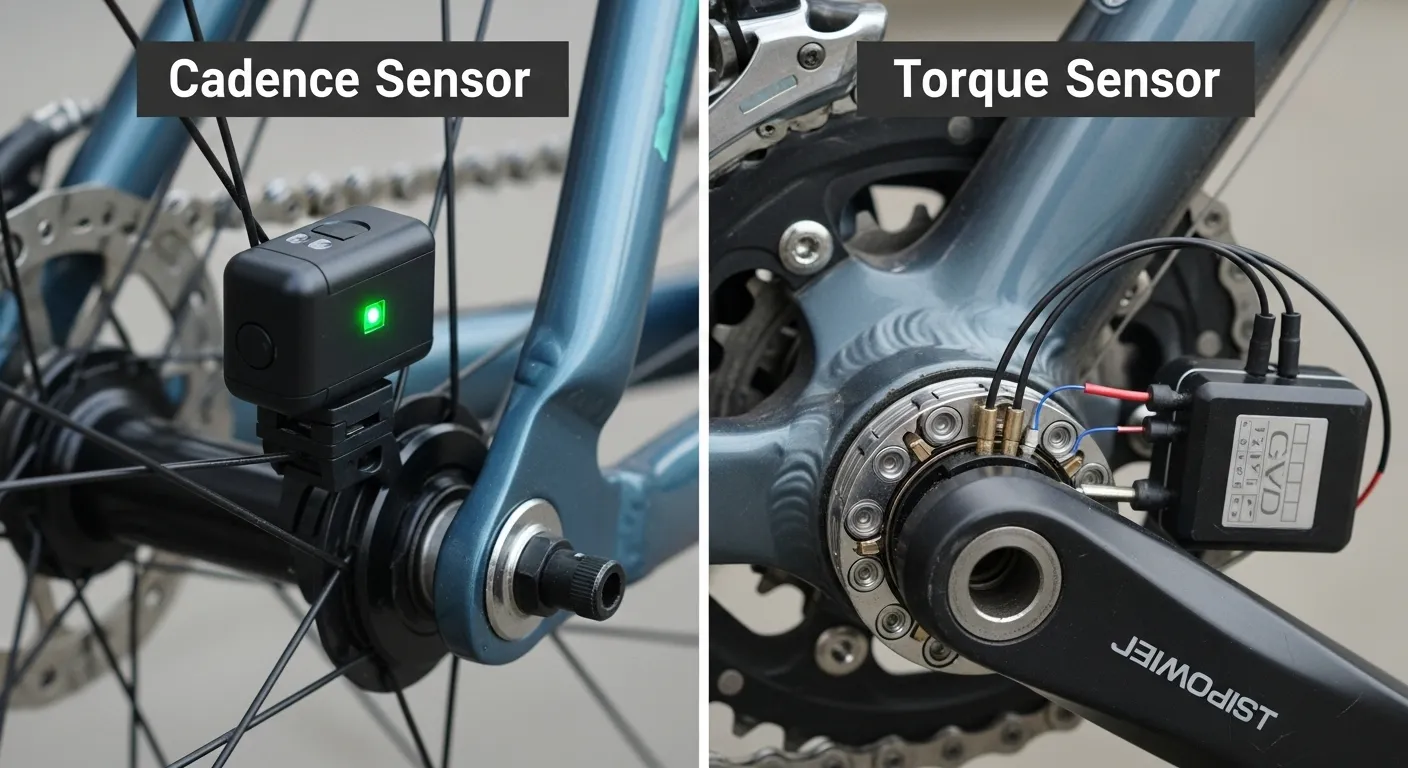
Two main systems deliver power in e-bikes: pedal assist and throttle. Pedal assist systems (also called pedelecs) activate the motor only when you pedal. These systems rely on cadence sensors that detect pedal movement or torque sensors that measure pedaling force. Torque sensors react more quickly by delivering extra power as you pedal harder, perfect for technical trails and uphill rides. Throttle systems work differently by delivering power through a handlebar control (twist grip or thumb lever) without pedaling. Riders can cruise like they would on a scooter, without pedaling. Throttle systems work great in stop-and-go traffic and help riders with limited mobility.
Legal speed limits and classes
E-bikes fall into three main categories:
Different rules apply to each class about where you can ride. Class 1 e-bikes usually get access to most bike paths, while Class 3 models might face restrictions because of their higher speeds. Tesla Bike Sales has high-quality e-bikes that deliver great performance no matter how you like to ride. Come test the perfect mix of human power and electric assistance today.
Core Components of an Electric Bike
Electric how do e-bikes work through a combination of several important parts that come together to give you powered assistance while riding.
Sensors: cadence vs. torque
Sensors control how the motor responds when you ride. Cadence sensors watch your pedaling speed and give steady help no matter how hard you push. Torque sensors are different – they measure how much force you use to pedal and match their help to your effort. Torque sensors give you a more natural ride by matching the motor’s power to how hard you pedal. This helps the battery last longer too. Cadence sensors give the same help all the time and cost less.
Battery capacity and location
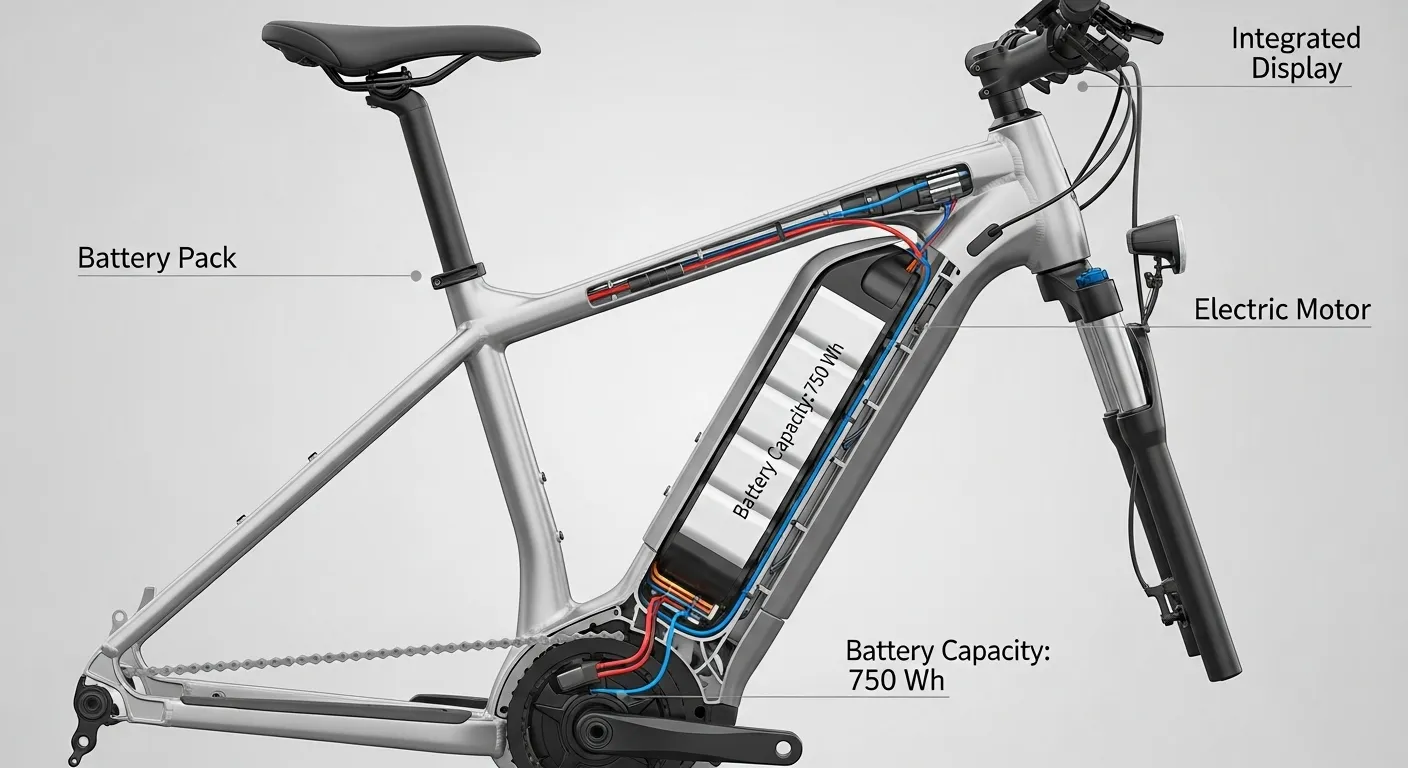
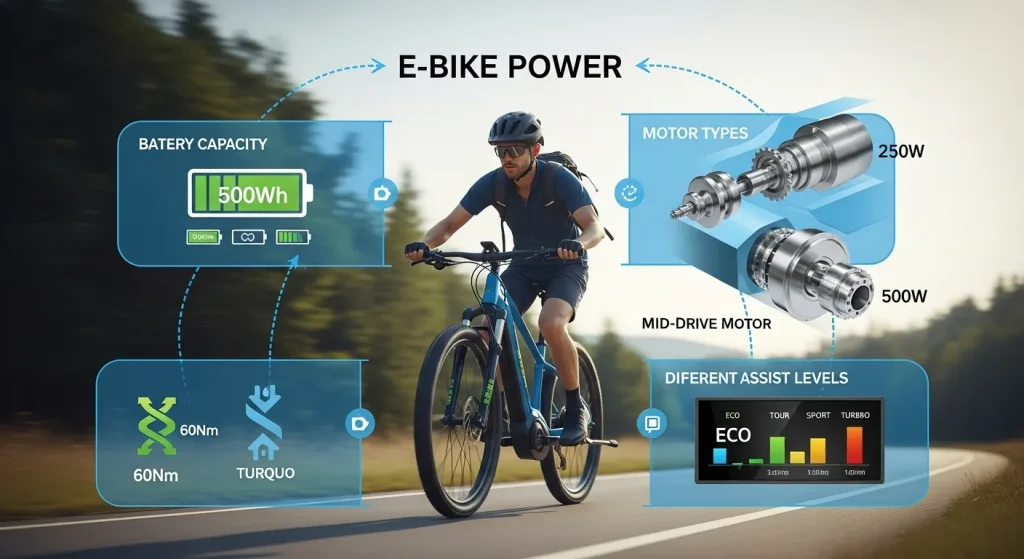
E-bikes run on lithium-ion batteries that come with three important specs: voltage (V), amp-hours (Ah), and watt-hours (Wh). Most bikes come with batteries between 36V and 52V, and their capacity ranges from 300Wh to 800Wh. Batteries usually mount on the downtube or hide inside the frame. Some bikes let you take the battery off to charge it. This affects how the bike’s weight is spread out and how it looks.
Motor types and placement
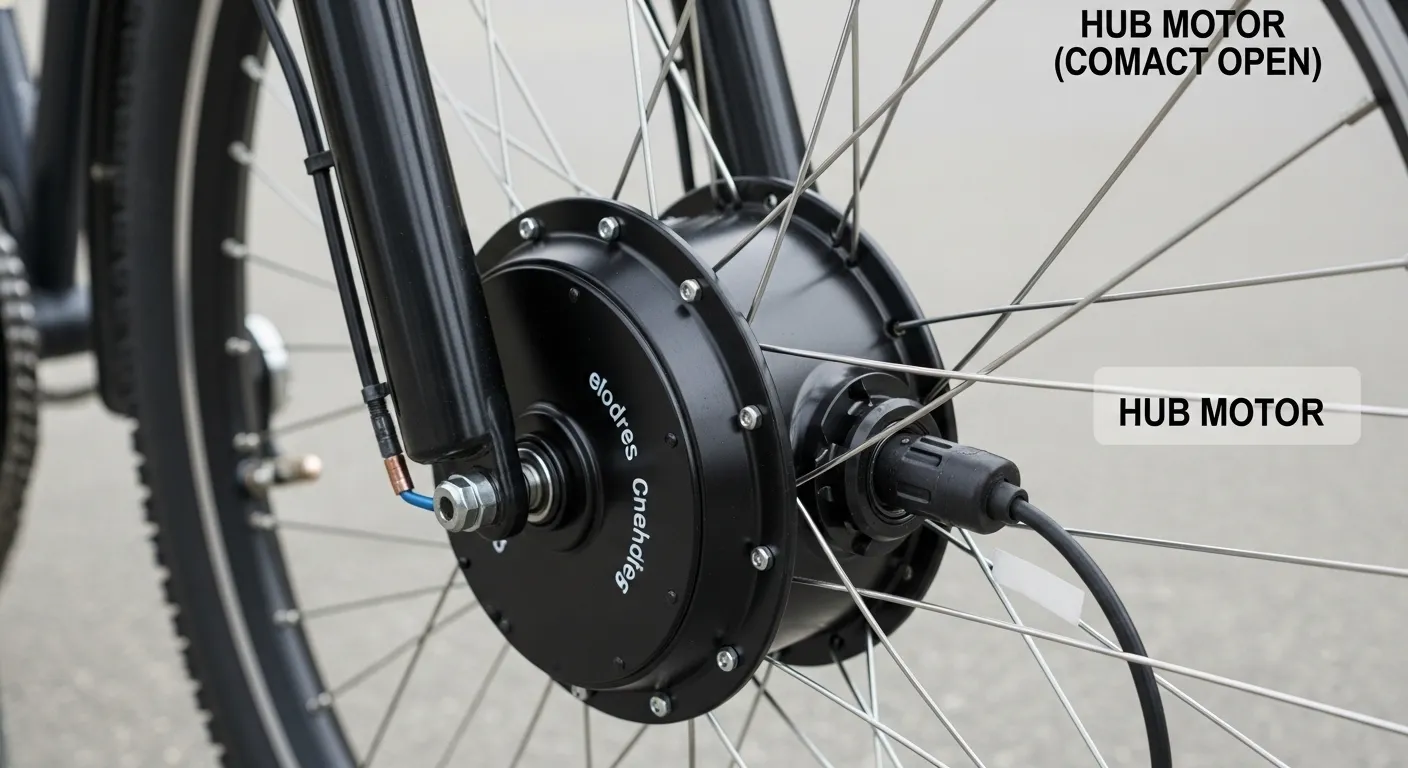
The motor is the heart of any e-bike’s power system. You’ll find two main types of motors in the market: hub motors and mid-drive motors. Hub motors fit right into the front or rear wheel hub. They’re simple to design and maintain. Mid-drive motors sit near the bottom bracket, which helps spread the weight better and makes the ride feel more natural. Mid-drive motors make use of the bike’s gears to deliver power more effectively. They work great on hills. The rear hub motors push you forward – a feeling many riders find easy to get used to. The trade-off is they add some extra weight to the back wheel.
Controller and display functions
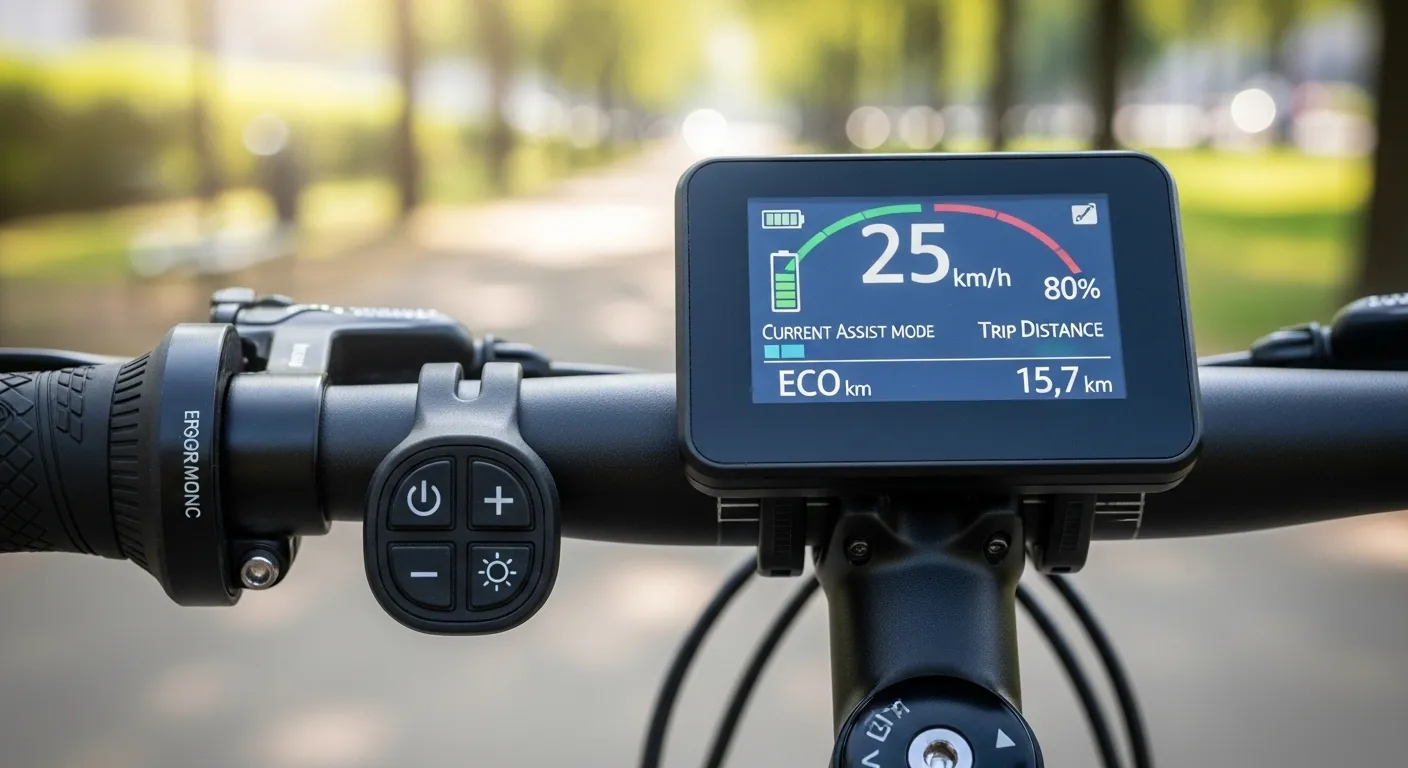
The controller works as the bike’s brain by managing power flow from battery to motor how do e-bikes work. This vital part controls your speed, keeps you safe with various protections, and reads what you want from throttles or pedal assist sensors. Today’s e-bike displays range from simple LED lights to fancy LCD screens that show your speed, battery life, and assist modes. These screens let you change how much help you get, track your ride stats, and control things like built-in lights. Want to see all these parts working together perfectly? Tesla Bike Sales has premium electric bikes built with top-quality components that deliver great performance.
Understanding E-Bike Power
You need to understand e-bike power metrics to learn how these machines how do e-bikes work. These measurements shape speed capabilities and riding range.
What is wattage?
Wattage (W) measures how fast energy flows through a system – the flow of electrical power. The watt rating of e-bike motors shows their continuous energy handling capacity. E-bike motors produce between 250-750 watts of power, which affects performance in different ways:
- A 250W motor reaches speeds of about 15 mph on flat terrain
- A 500W motor achieves approximately 20 mph and tackles hills better
- Higher wattage means more power, acceleration, and torque
Continuous and peak wattage differ significantly. A motor rated for 750 watts of continuous power might reach 1,000 watts at peak output, especially while climbing steep hills.
How voltage affects performance
Voltage (V) acts as electrical “pressure” in the system – the potential power stored in an e-bike battery. E-bike batteries come in voltages of 24V, 36V, 48V, or 52V. Higher voltage systems bring several benefits: Higher voltages help you climb hills better. A 48V battery performs better than a 36V battery on steep terrain because the lower voltage system works harder for the same results. Higher voltage also relates to faster acceleration and better overall performance.
Amp-hours and battery life
Amp-hours (Ah) show the capacity of an e-bike battery – like the size of a “fuel tank”. A 1Ah battery should supply 1 amp of current for one hour, 2 amps for half an hour, or 1/3 amp for three hours. E-bikes with higher amp-hours go further between charges. Most e-bikes use batteries between 10Ah and 20Ah. Batteries with higher capacity let you ride longer before needing a recharge.
Calculating range with watt-hours
Watt-hours (Wh) give the most accurate measurement of total battery energy. The math is straightforward: Voltage (V) × Amp-hours (Ah) = Watt-hours (Wh). Here are some examples:
- A 36V 10Ah battery has 360Wh of energy
- A 48V 10Ah battery has 480Wh of energy
You can estimate range by dividing the battery’s watt-hours by energy use per mile. E-bikes use about 10Wh per mile on flat terrain and 20-25Wh in hilly areas under ideal conditions. A 480Wh battery could take you 20-48 miles depending on terrain, your weight, and assistance level. Tesla Bike Sales has premium electric bikes with power systems optimized for all riding conditions. Find your perfect balance of power and performance today.
How the System Works Together
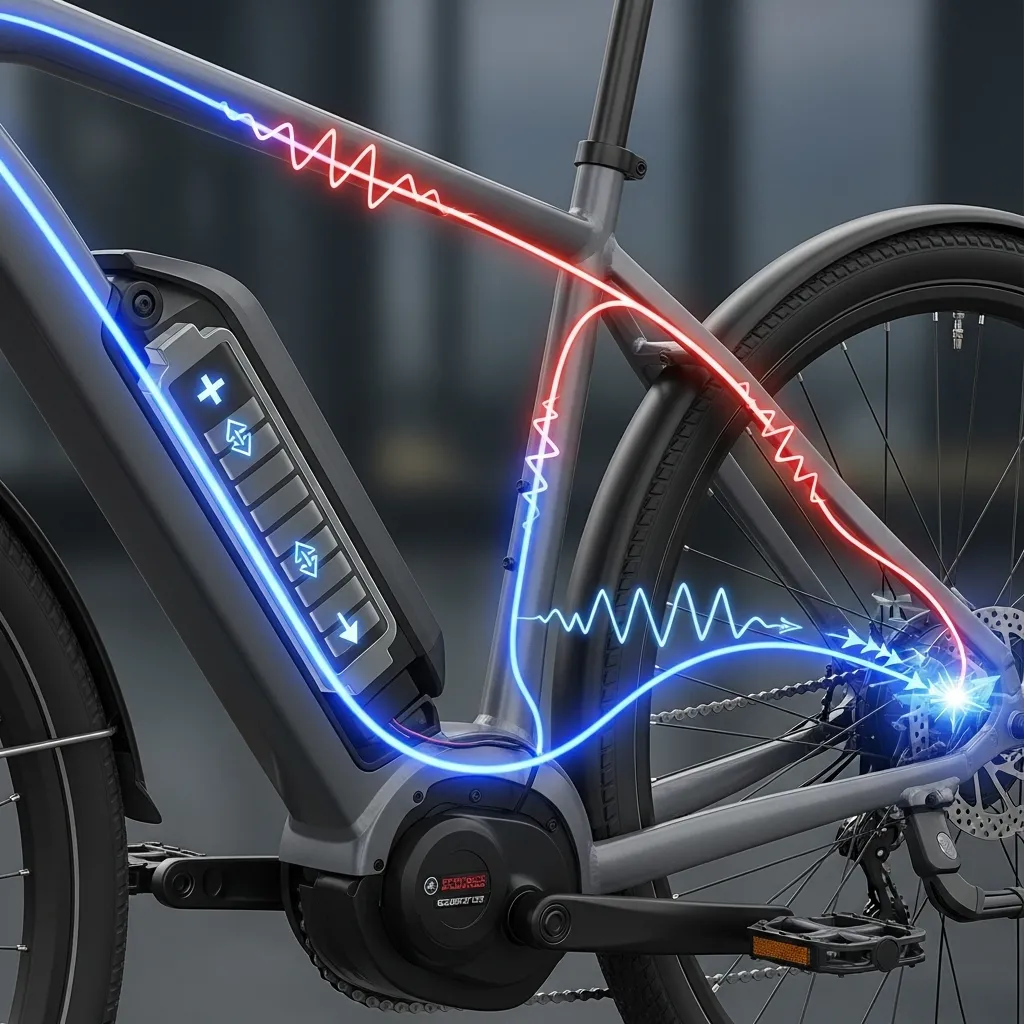
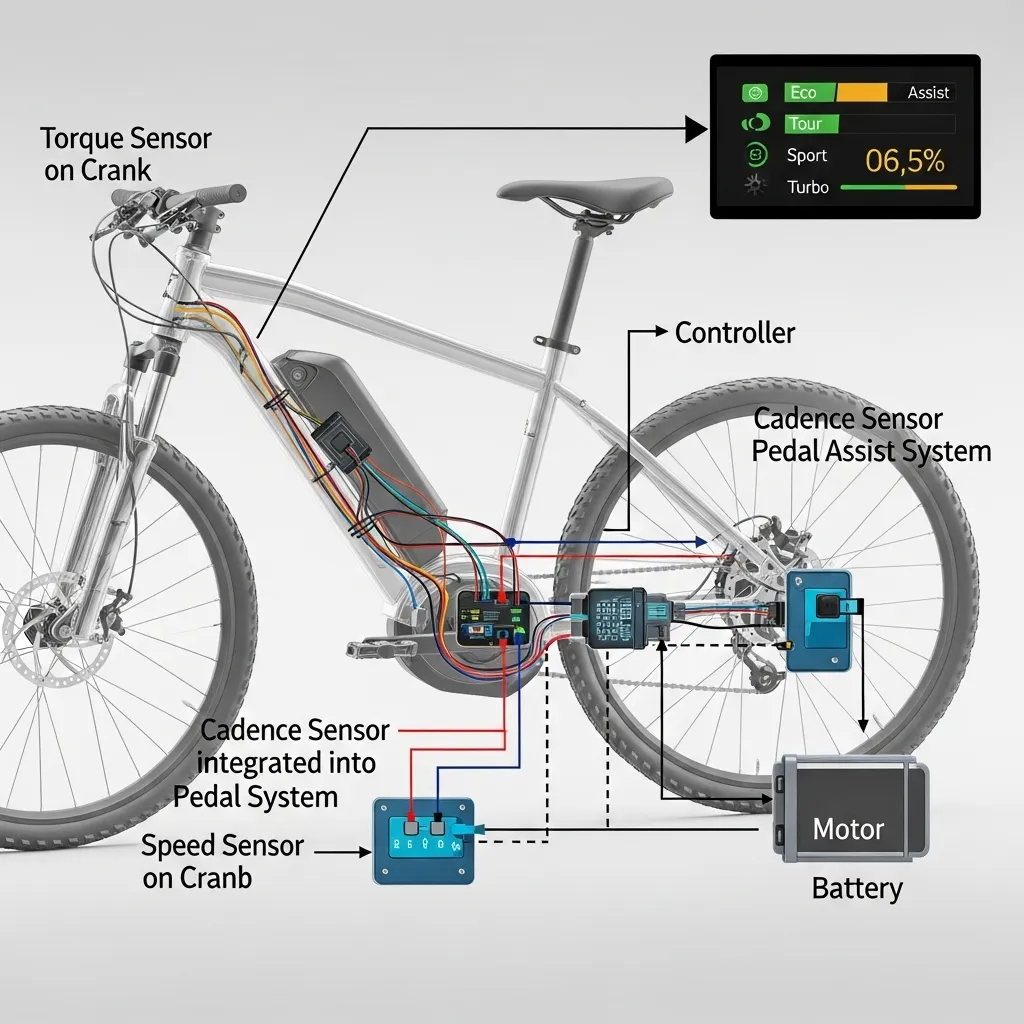
E-bikes feature an electrical system that works as a connected network. Each component has a vital role to create a smooth riding experience. The system’s inner workings reveal how e-bikes truly function.
Power flow from battery to motor
The controller serves as the command center and works as a DC-DC buck converter. It steps down voltage while increasing current proportionally. The controller draws electricity from the battery based on capacity needs – the battery never “pushes” too much power to the controller. This smart power management will give a balanced energy delivery throughout the system.
Role of sensors in assist levels
Sensors connect rider input to motor response. These sensors detect your pedaling and signal the motor to activate. The torque sensors measure how hard you pedal and adjust assistance accordingly. Your selected assist level combines with speed data that helps the controller determine the right motor output.
Safety cutoffs and speed limits
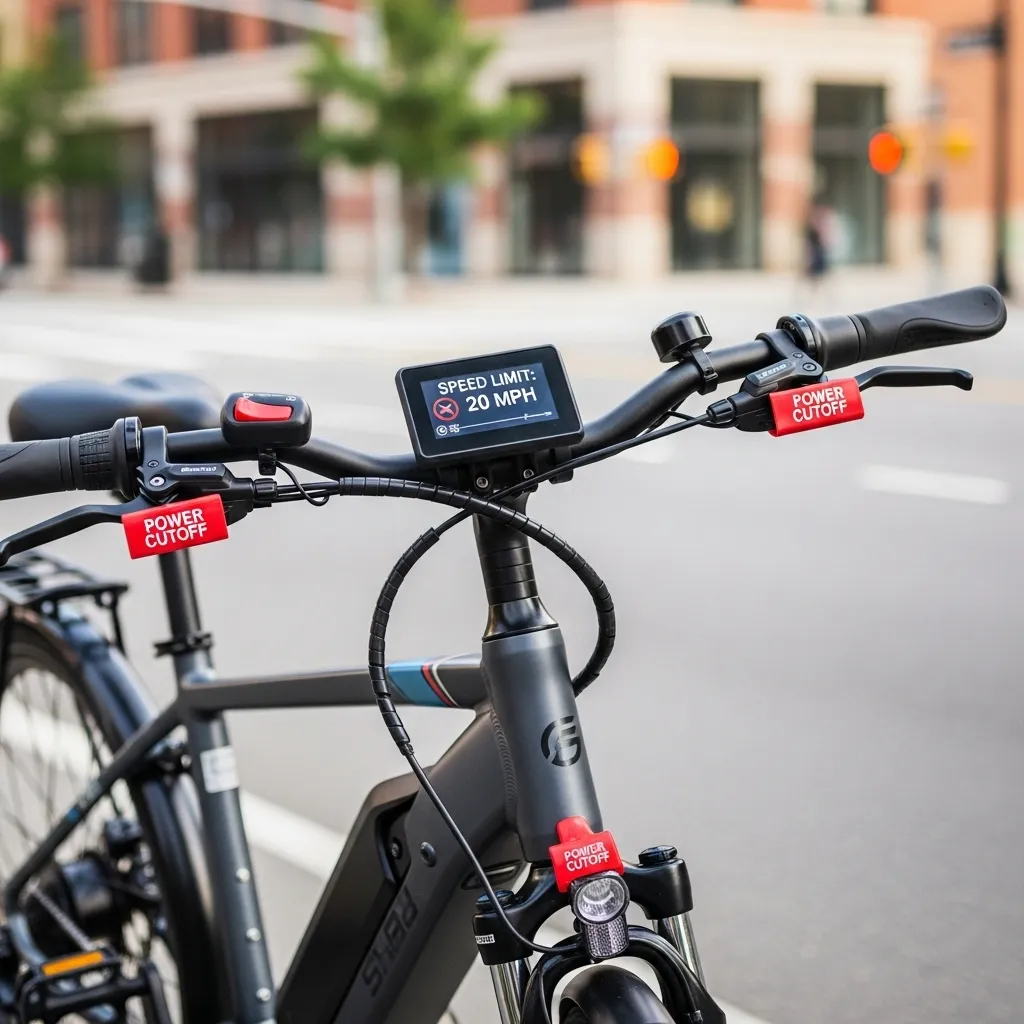
E-bikes come with automatic safety systems that control motor assistance. These limits kick in at legal speed thresholds, typically 20 mph for Class 1/2 or 28 mph for Class 3 bikes. The controller smoothly reduces power as you reach these limits. Such built-in protections help prevent excessive speeds and make components last longer. Tesla Bike Sales offers premium e-bike models.
Conclusion
how do e-bikes work blend traditional cycling with electric power, giving riders a smooth, effortless boost, like having a constant tailwind. Knowing the basics of motors, batteries, and bike classes helps you choose the right model. They make commuting easier, handle hills with ease, and let riders of all fitness levels ride together.
With improved batteries, smart assist systems, and built-in safety features, e-bikes offer an eco-friendly, reliable, and enjoyable way to travel. Tesla Bike Sales has premium e-bikes that represent these cutting-edge features. Their quality models deliver great performance whether you’re commuting or hitting trails. Want to try the perfect mix of human power and electric boost? Tesla Bike Sales will help you find an e-bike that matches your needs and takes your cycling to new heights.