Pedal Assist vs Throttle: Key E-Bike Differences 2025
Your e-bike riding experience depends on choosing between pedal assist and throttle systems. These power delivery methods create unique ways to interact with your electric bike. Pedal assist works with you. The motor kicks in only when you pedal, and sensors measure your effort to match power output. A throttle system lets you control power through the handlebar with a twist grip or thumb lever – no pedaling needed. The choice between a throttle on ebike or pedal assistance comes down to your riding style and needs.The system you pick also determines your e-bike’s legal class.
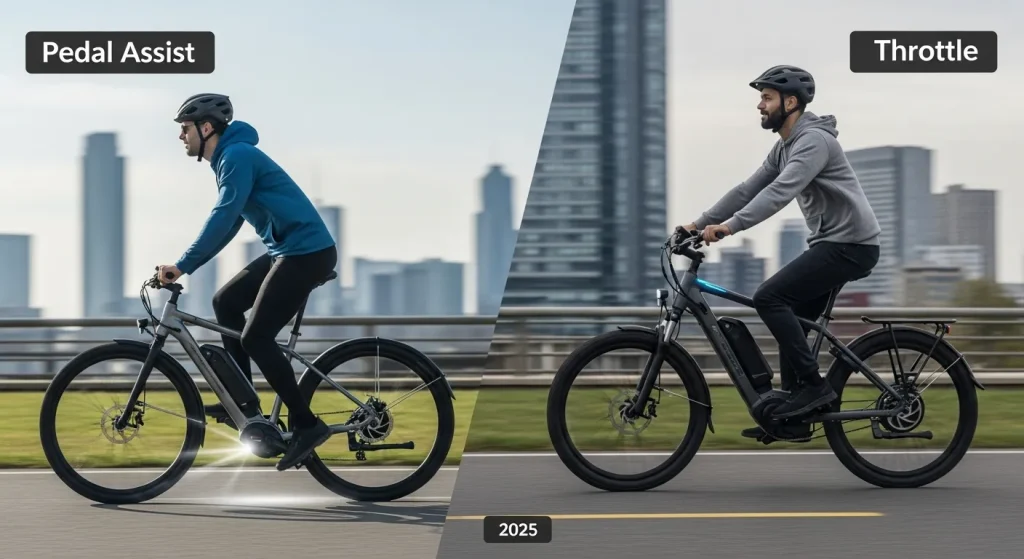
E-bikes come with pedal assist only and top out at 20 mph. e-bikes give you both throttle and pedal assist up to 20 mph. models push pedal assistance to 28 mph. U.S. laws cap throttle-powered speeds at 20 mph, though pedal assist can reach 28 mph legally. Legal rules aside, your choice affects battery life too. Pedal assist helps your battery last longer since it only uses power when needed. Throttle e-bikes shine in city traffic and help riders with mobility issues. They’re versatile and can work as regular pedal assist bikes too. This piece breaks down the key E-Bike Differences between electric bike pedal assist and throttle systems. You’ll learn which option matches your riding style and needs best.
Throttle vs Pedal Assist: Core Functional Differences
E-bikes use pedal assist and throttle systems that work differently. Each system has unique mechanical principles and components that greatly affect your ride.
Throttle Operation
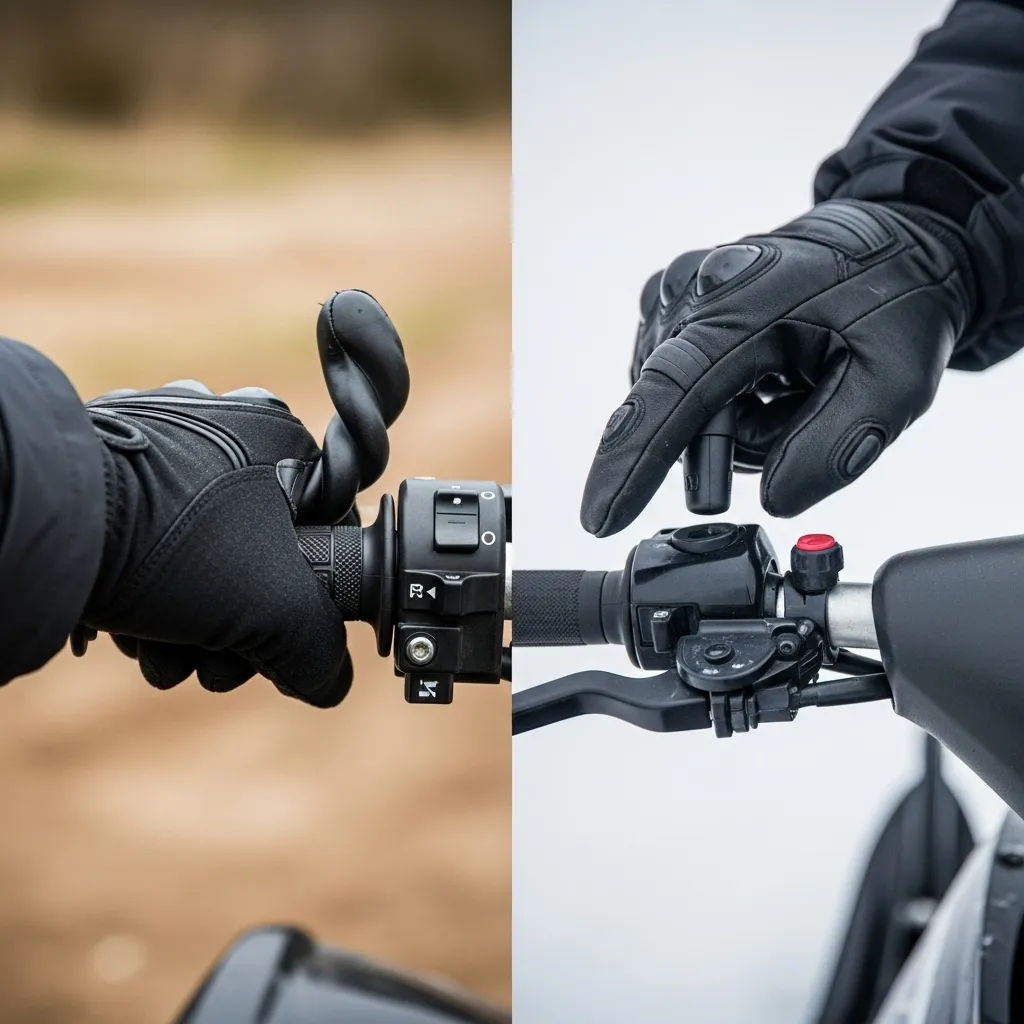
You’ll find two main types of e-bike throttles, twist throttles and throttle levers. The twist throttles take up part of your handlebar grip and work when you rotate them backward, just like a motorcycle. Throttle levers mount beside the grip and work with your thumb. Many riders choose half-twist throttles because they can keep a solid grip while using the motor. These work like basic cruise control. Throttles come in two varieties. Some give more power as you twist them further, while others work as simple on/off switches. Most manufacturers put throttles on the right handlebar.
Pedal Assist Mechanics
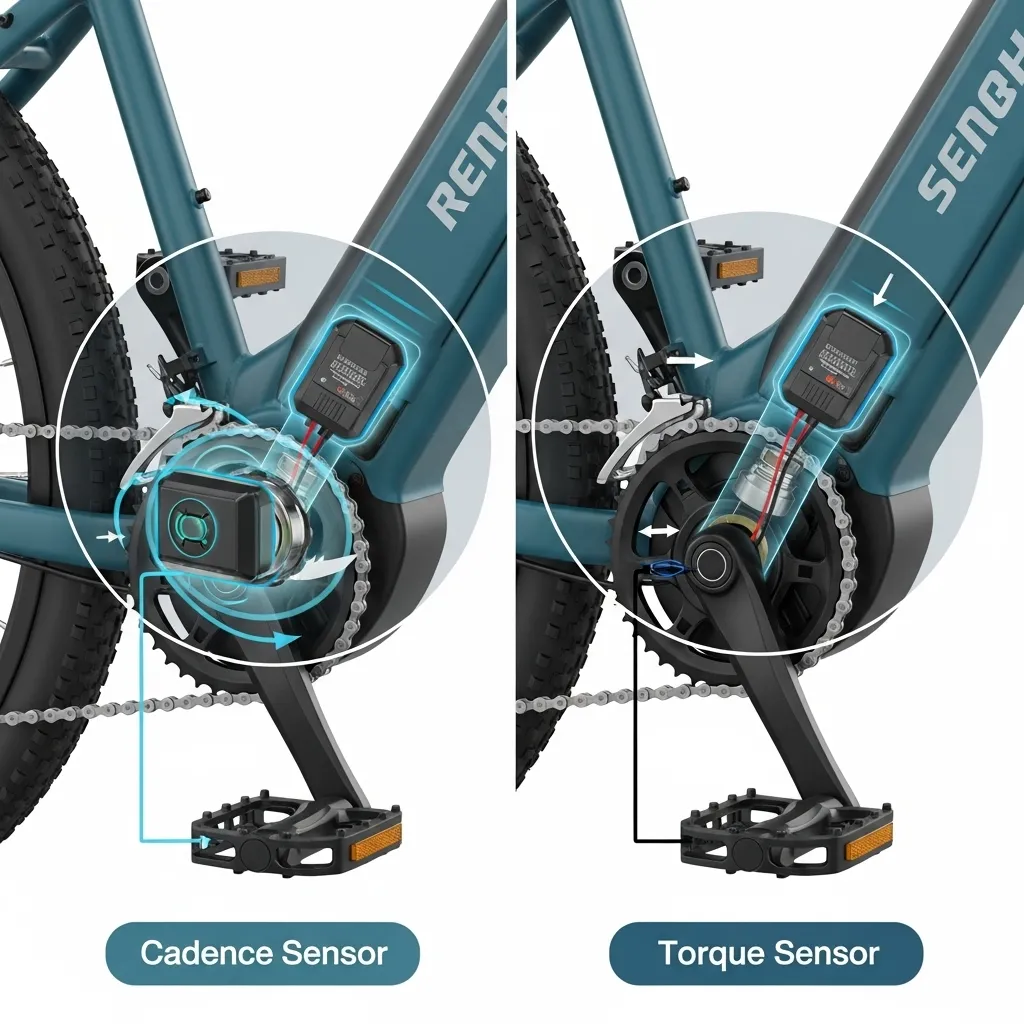
Pedal assist systems need sensors to control power delivery. Cadence sensors work as basic switches, they detect if you’re pedaling, whatever the effort. Once they activate, they supply a preset amount of power based on your chosen assist level. Torque sensors take a different approach. They measure how hard you push the pedals by taking readings 1,000 times every second during your pedal stroke. This creates a more natural feel as the motor adds power based on your effort. Picture having invisible muscles in your legs, push harder and you’ll get more power.
Motor Types
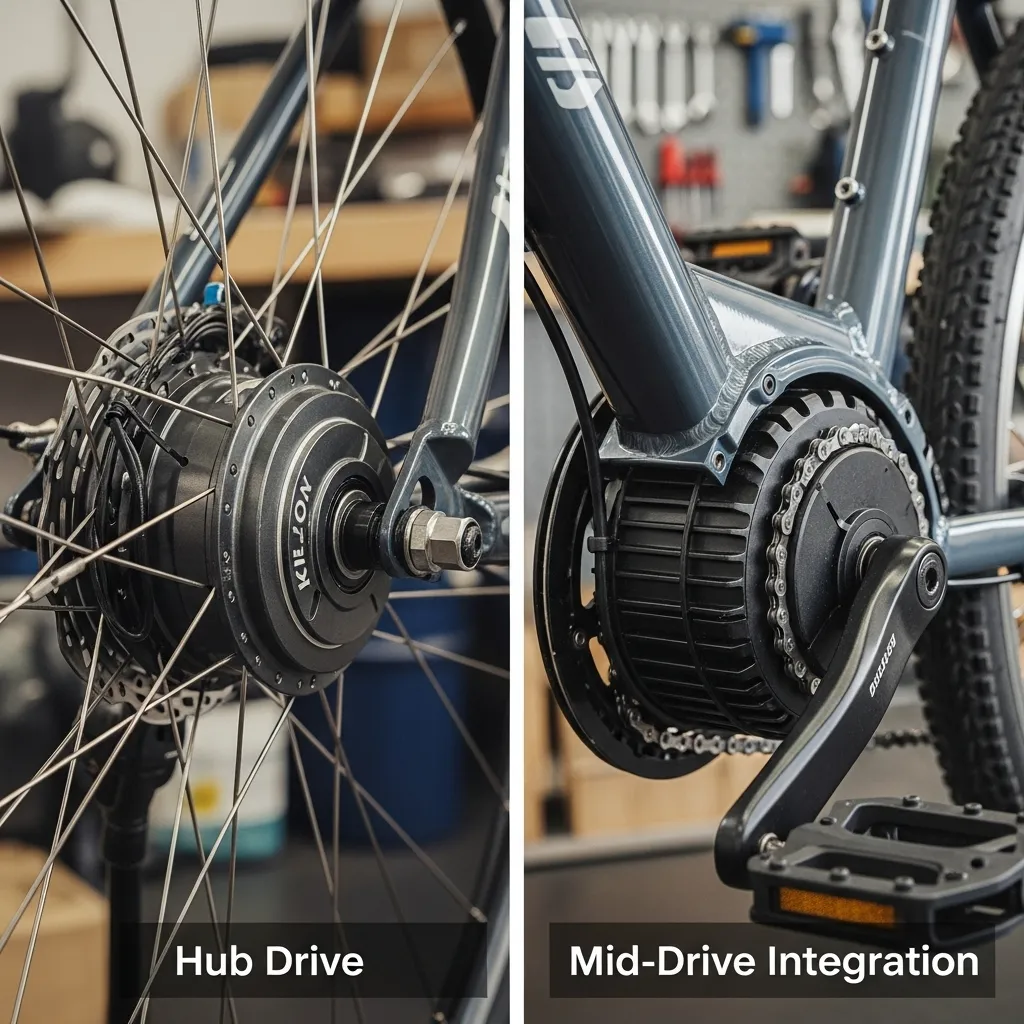
Your e-bike’s motor location and design play a crucial role in how throttle and pedal assist systems work. Hub motors sit inside the wheel hub and drive the wheel directly. This creates a pushing or pulling feeling. The design offers simplicity but loses efficiency on varied terrain since it can’t use the bike’s gears. Mid-drive motors sit at the bike’s bottom bracket and send power through the drivetrain like your legs do. This central position balances weight better and lets the motor use the bike’s gears. As a result, you get better performance on hills and varied terrain.
E-Bike Classifications and Legal Implications
E-bikes have become so popular that states needed to create standard rules about where people can ride them legally. Right now, 36 states use a three-class system that makes clear E-Bike Differences based on how pedal assist and throttle features work.
Class 1: Pedal Assist Only (Up to 20mph)
You’ll find Class 1 e-bikes come with pedal assist and no throttle option. These bikes help you only when you pedal and stop helping once you hit 20 mph. The controller uses sensors near the crank to detect your pedaling and powers up the motor. Big names like Giant, Specialized, and Trek make Class 1 e-bikes. These bikes are a great way to get access to most bike paths, trails, and cycling spots because they need pedaling to work.
Class 2: Throttle + Pedal Assist (Up to 20mph)
Class 2 e-bikes let you use both pedal assist and throttle, but still max out at 20 mph. The throttle comes as a button, lever, or half-twist grip that powers the motor without pedaling. This setup works great in stop-and-go traffic or when you need a break from pedaling. Notwithstanding that, federal rules say your e-bike might count as a motorized vehicle in some places if you rely too much on the throttle.
Class 3: High-Speed Pedal Assist (Up to 28mph)
Class 3 e-bikes push the speed limit to 28 mph with pedal assist, making them the fastest legal option. These bikes must have a speedometer. The higher speeds mean more rules – many states won’t let you ride them on shared paths, and you might need to be 16 or older and wear a helmet. Some places let Class 3 bikes have throttles, but they can’t go faster than 20 mph using throttle alone.
Unclassified E-Bikes: Legal Gray Areas
E-bikes that don’t fit these classes live in a murky legal space. Bikes with motors over 750 watts, ones without working pedals, or models that go above 20 mph on throttle power don’t belong in the three-class system. These unclassified e-bikes often need the same paperwork as mopeds or motorcycles. On top of that, it’s worth noting that “Class 4” e-bikes with no speed limits aren’t legally considered bicycles by federal law and face heavy restrictions or bans in most areas.
Performance and Efficiency in Real-World Use
The differences between pedal assist and throttle systems become clear during everyday riding conditions. These differences matter most to riders who use their bikes regularly.
Battery Life: PAS Efficiency vs Throttle Drain
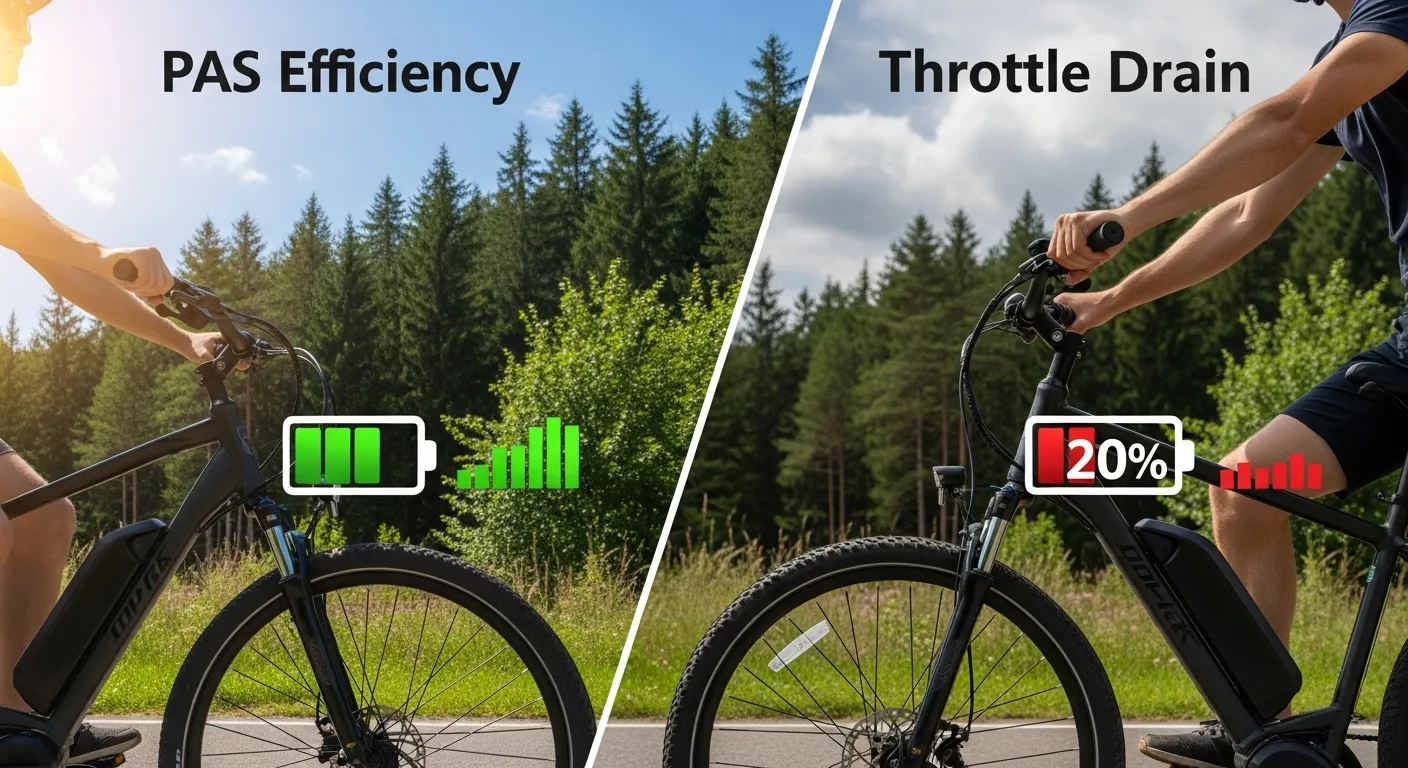
Pedal assist systems give you much better battery range than throttle-only riding. You’ll get 40-100+ miles per charge with PAS compared to 20-35 miles with throttle. This happens because riders add their own effort to the motor’s power with PAS. Torque sensors are great at optimizing power. They use just enough power to match your pedaling effort.
Speed and Acceleration: PAS Boost vs Instant Throttle
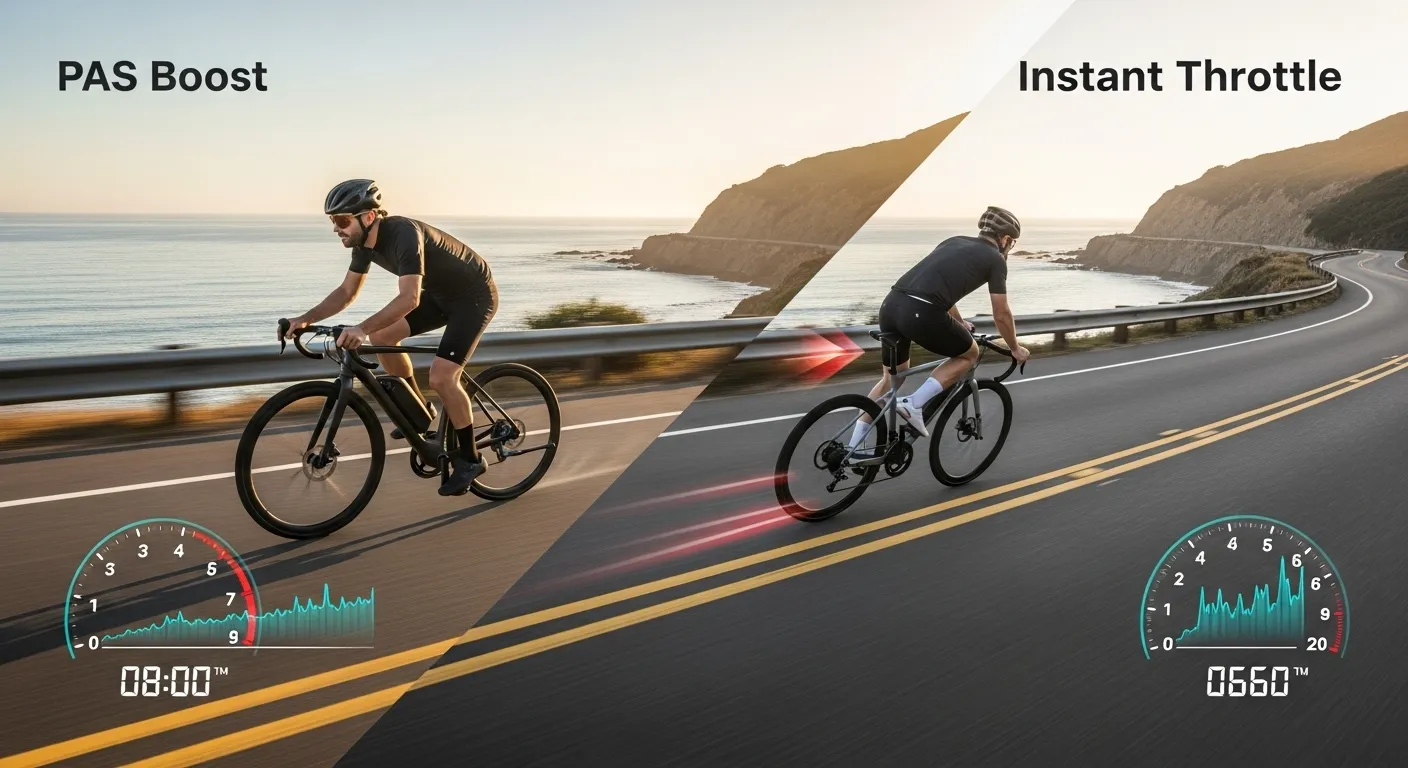
Throttle systems give you instant power, perfect to start quickly or pass others. Starting up takes several seconds less with throttle. PAS lets you reach higher maximum speeds by mixing your pedaling power with the motor’s help. Throttle works great in stop-and-go city traffic, while PAS shines on longer rides.
Hill Climbing: Combined Power vs Instant Torque
Throttle gives steady power on steep hills without needing much pedaling. PAS works best on hilly terrain because it combines your leg power with battery power. Torque sensors respond as you pedal harder by giving more help on climbs.
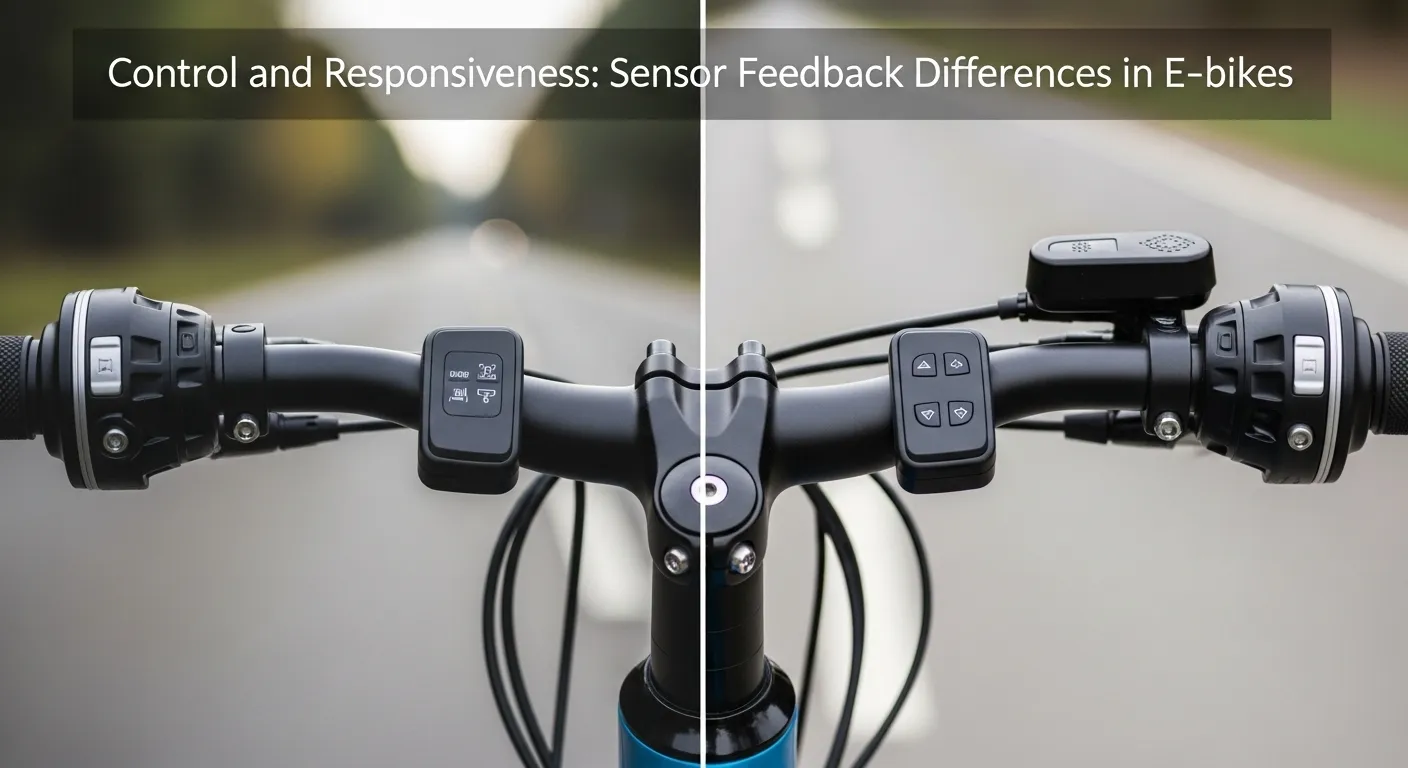
Control and Responsiveness: Sensor Feedback Differences
Advanced torque sensors make riding smoother by measuring pedal pressure immediately instead of just detecting if you’re pedaling. This force-based system will give a balanced power boost that matches your effort in any situation. Throttle systems might feel jerky or harder to control.
Use Cases and Rider Preferences
Your needs and riding scenarios determine which e-bike system works best for you. The routes you take daily and your goals play a significant role in choosing the right control system.
Urban Commuting: Stop-and-Go Convenience
City riders find throttle systems excel at busy intersections and traffic stops. Knowing how to accelerate quickly without pedaling makes urban navigation safer. Riders can move through traffic with precise power delivery using throttle controls. Class 2 e-bikes with throttle features give you maximum flexibility in stop-and-go traffic. This becomes vital during rush hour when quick starts help prevent dangerous situations.
Fitness and Exercise: Pedal Assist for Active Riders
Active riders love pedal assist systems. Studies show that people using pedal assist e-bikes ride longer distances and more often than regular cyclists. Class 1 e-bikes with pedal assist work best to promote physical activity. Research confirms that e-biking meets WHO’s recommended moderate physical activity levels. We noticed that pedal assist creates workouts that don’t feel like exercise. This makes it perfect for anyone wanting regular activity.
Mobility and Accessibility: Throttle for Limited Pedaling
Throttle controls are a vital accessibility feature for riders with mobility limitations, joint issues, or physical constraints. Seniors and people recovering from injuries benefit from the simple twist-and-go feature. These systems let people with limited pedaling ability enjoy cycling freedom.
Hybrid Riding: Switching Between Modes
Most riders prefer e-bikes that offer both pedal assist and throttle options. You can adapt to different terrain, traffic conditions, and energy levels during your ride. The combined systems help you save battery power based on conditions – pedal assist for range and throttle for tough situations.
Conclusion
Choosing between pedal assist and throttle systems depends on how you ride and what you need. Pedal assist offers a natural, fitness-friendly feel and better range, while throttle systems provide instant power and convenience, especially in city traffic. Legal classes define where you can ride, with Class 1 and 3 favoring pedal assist and Class 2 allowing both. For the best flexibility, dual-system e-bikes combine both modes so you can switch between efficiency and power as needed. The right choice ultimately depends on your local laws, comfort, and riding goals, helping you get the most out of every ride. The Essential E-Bike Accessories Guide is a good guiding post.